issue 8
// nonfiction
Buoy
by Dawn McCombs
I was standing knee-deep in the ocean, wearing my sunglasses and a NY baseball cap. With sunglasses and cap still on, I started swimming towards a red and white buoy.  My daughters said they saw me swimming away, my cap and arms the only parts of me above the water. I heard them call out, until their voices eventually faded. When I’ve retold this story, I’ve called it immersion therapy. I wonder now if it was more like Virginia Woolf walking into the sea. I didn’t have any rocks in my pockets, and I knew how to swim, but I was living in a dead woman’s body. If I got caught in a riff tide or swallowed by a shark it would have been fine.

I had a phobia of swimming in the ocean that started when my parents took me to see Jaws on the big screen when I was ten. When we got home, I screamed in the bath, fearful that a gigantic shark was going to swim up from the sewer pipes and eat me whole. From that point on, a minnow brushing against my foot would send me screaming and flailing towards the shore, even in swimming holes in Ohio.

I didn’t make it to the buoy in that first attempt. I had the stamina, but my mind wouldn’t allow me to keep swimming. When I joined my daughters on the shore, they were dumbfounded. I’ll never forget my youngest asking, “Are you trying to die?”

The next day I did it again. I didn’t go far and when I joined my daughters splayed out on their beach towels slathered in sunscreen, they just shook their heads in amazed confusion at my new obsession.

The third day I convinced my daughter’s boyfriend to go with me. He would climb to the top of fire towers and skateboard on tall narrow ledges, so I thought he possessed the bravery needed to accompany me to the buoy. He ended up getting winded and had to turn around. I followed quickly. It became a running joke: Look at mama swimming to the buoy.

Two years before I tried to become Diane Nyad, my husband of twenty-five years announced one morning that he would be moving out before I returned home from work that day. That night on the phone my daughter talked to him, and she reported that he was laughing, whistling even, as he set up his new home. I, in contrast, lay on the couch feeling like my chest was being crushed, struggling to breathe.

At the age of fifty-five, Kate Spade hung herself using a red scarf attached to a doorknob. After my husband left me abruptly, not long after her death, I tried to do the same thing, except my scarf was blue. I tied mine to the bedpost. I found the scarf hanging on a hook in my closet. It was a purchase I’d made thinking I would become one of those people who could pull off wearing a fancy scarf. I never wore it. I researched illustrated instructions on hanging, but even with pictures I wasn’t successful. I was never good at tying knots or folding origami, and it seemed these skills were related and needed in this task. Instead, I lay there foolishly breathing with a scarf wrapped around my neck for an hour. Eventually I called my best friend. We sat on my front porch on that chilly dark evening, because it was COVID and no one was gathering indoors yet. She got me through that night, and I didn’t attempt again, but thoughts of suicide remained.

On the fourth day I swam towards the buoy I wasn’t carrying rocks in my pockets. Whatever had made me want to swim far out into the ocean initially had shifted into something totally different. It may have been the adrenalin of being far out in the ocean combined with the courage to remove a fear that I had carried inside of me for most of my life. I was feeling less numb. In fact, I was beginning to feel the desire to live again. Then, I froze up. My mind stopped me from swimming. Frustrated, I turned around but was completely surprised to see a woman right behind me. “Are you swimming to the buoy?” she asked. I said yes without hesitation and turned and began free styling towards the buoy like an Olympic swimmer, with her close behind.

We reached the buoy together and clung to it as it swayed, balancing our collective weight. I learned that when you are this far out, the ocean is calm, and there is less turbulence than when you are nearer to the shore. I noticed that she didn’t have any hair, eyebrows, or eyelashes. She then shared that she was cancer free and felt that she was getting a second chance at life. She was on this trip with her family, celebrating, and noticed me swimming every day towards the buoy. She had always been afraid of swimming in the ocean, so thought if she followed me, she could make it too. She hadn’t noticed that I had been failing.

We discovered that we were both fifty-five-year-old women figuring out how to do hard things. We cried and then we talked for a long while, clinging onto that buoy before eventually swimming back. She veered left to find her family and I veered right to find mine. I ended up swimming to the buoy every day after that without any fear.

I searched each day after that for the woman who swam with me but couldn’t find her. On the morning we were leaving I scanned the beach one last time and finally spotted her far away, with her family. I could see that she was laughing into the sky, her head thrown back and crowned in a red scarf.
about the author // Dawn McCombs
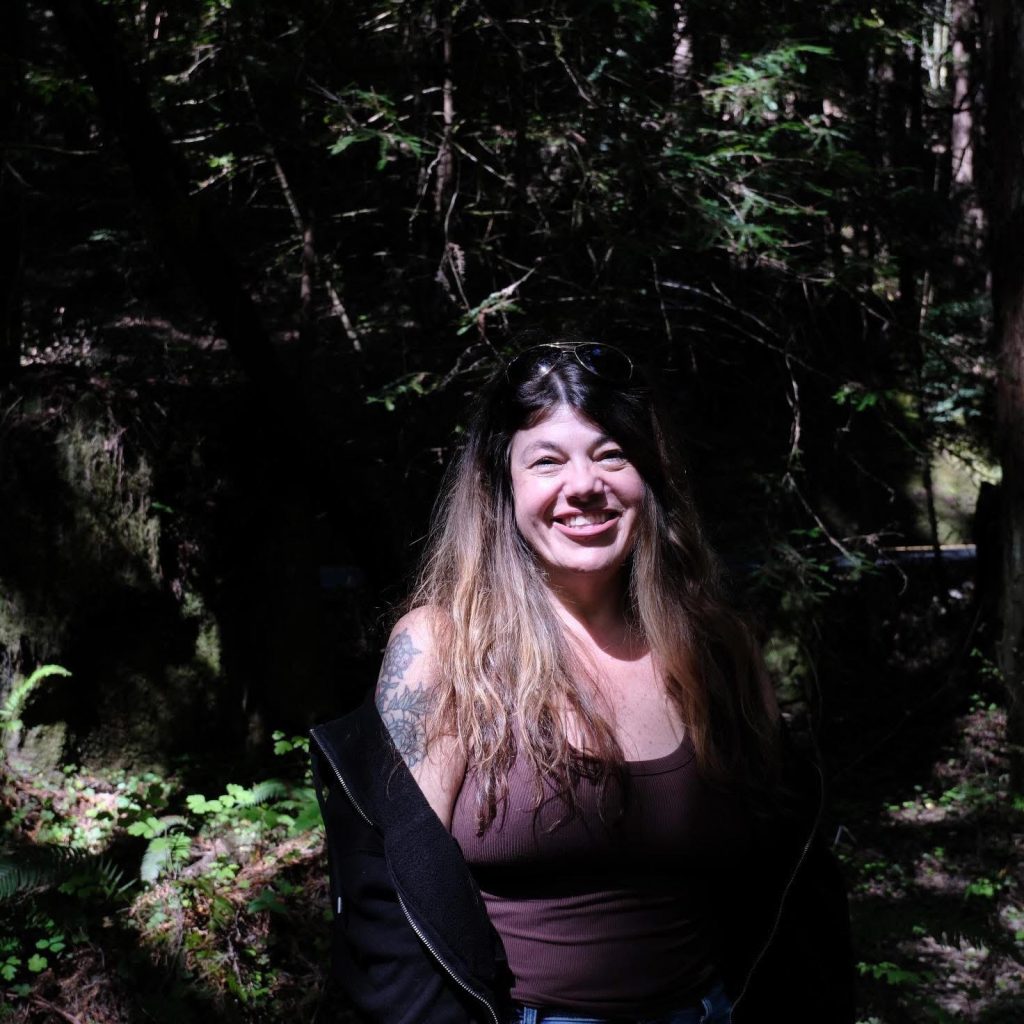
| Dawn McCombs is an essayist living in Columbus, Ohio. Her work has been published in The Audacity, Khora, Vernacular, MUTHA, Chicago Story Press and she was shortlisted in Fractured and Fused 2026 Prize in Fractured Lit. She dreams of living in a van and freeing herself. |
Instagram: @dawn_mccombs
Substack

