ISSUE II // FEATURED POET // FIZZA FATIMA
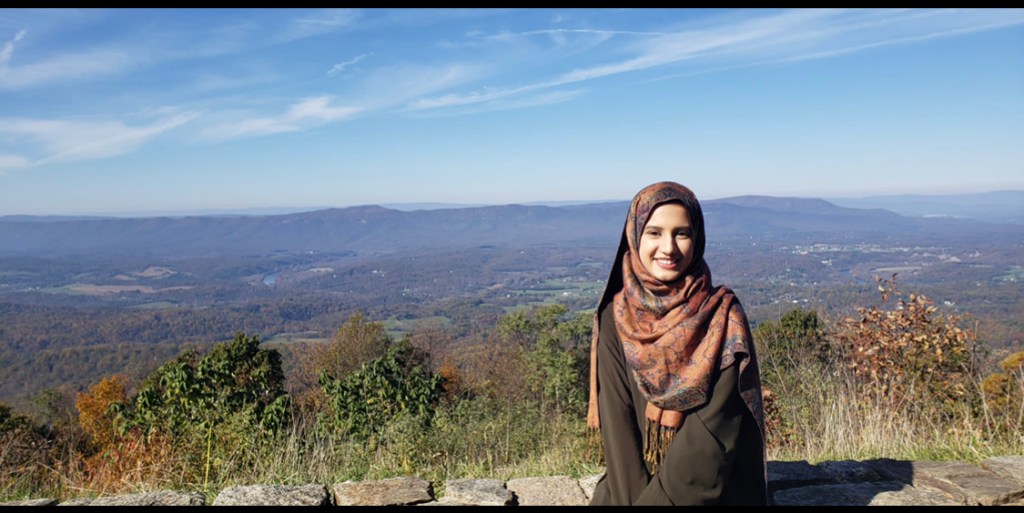
Featured Poet of Issue II:
Fizza Fatima
About Fizza:
Fizza Fatima is a writer wrestling with the worries of writing from within the Heart of Empire. It’s not lost on her that while she frets over metaphors and similes, argues with herself about the correct placement of enjambments, Israel is setting fire to refugee encampments. Fizza would like to take this space to condemn the Genocide in Gaza and highlight the story of a young writer named Nour who at 16 years old writes with more resilience, courage, and heart than all the writers of Empire. Nour hopes to publish her own books, and mourns the loss of her collection at home. She speaks of the walls of her old room bearing witness to the destruction of her home, the same walls which witnessed her grow up. Here is the link to her chuffed campaign. Please donate whatever amount you can.
wildscape‘s Interview with Fizza
Ophelia: What would you like to share about your story? How did you become interested in poetry, and how long ago did you begin writing?
Fizza: I was fed poetry at a very young age, even before I knew language. My father, sat criss-cross on his prayer mat, would hold me in his lap reciting “poem after poem like a call to prayer.” And I suppose I answered. The first poems I ever “wrote” I sang, they were poems in praise of the Prophet, because those praises and prayers are what made up the majority of my early schooling in poetry.
Ophelia: What feelings and/or messages do you hope to convey with your writing?
Fizza: I think what I hope to convey through my writing is some measure of attempting to language the ineffable, as poeming has always been a sacred practice for me. Or near enough. There are times when it’s not, when it is simply a vehicle into which I pour my rage and frustration, but somehow in the crafting of a poem I think there is an ethos of care and patience that distills otherwise rushed emotions into their truest essences. It is a practice that when applied to our selves can—I think—in no small way make us better. Maybe that better means healthier? I don’t know. I don’t like the word healthier or healthy and equating it to better—that might be chronic illness talking. But maybe better as in healing. Healing is a word I can cope with, better than healthy. I think I have found that insofar as illness can be chronic so too is healing. I like to consider myself a chronically healing being. Healing from this ordeal of being. And I think I am able to do that through poetry. Because poems, unlike other literary forms, demand a stillness from you. They demand that you pause, and in a world that refuses to stop spinning, on an earth built on ever shifting tectonic plates, poetry allows you space to breathe between the earth’s trembling resonances.
Ophelia: What hopes and goals do you have for yourself, as a writer and/or otherwise?
Fizza: I hope to be better. A writer, a person.
Ophelia: What is the best piece of advice you’ve ever been given?
Fizza: This is a hard question, because every good piece of advice I received was particular to the moment in which I recieved it, there is little that can serve as a catch all. But there is something my mom has always said to me growing up, and I think it’s greatly shaped the person that I am today, which I struggle with translating—translating my mother is another theme in my writing. There is so much of her language that is rooted deep inside me, yet the world in which I move and craft and construct is made of an entirely separate alphabet. Many of my poems wrestle with being caught between two tongues, and funnily enough the ones that do often involve my mother. Because I think, in much the same way as I learned poetry from my father—the rhymes, the rhythms, the calls to prayer—I learned how to language from my mother. She is wonderful at untangling the knots I furiously weave into the fabric of my existence with very few words. And I spend poems upon poems trying to translate those easy words into the English of my poeming. But the advice I was going to poorly translate in answer to your question, essentially comes down to “before you find faults in others, find your own.” And I think if more of us moved in the world from such a vantage point, we would be kinder to each other, and if we were kinder to each other, we would be able to be kinder to ourselves.
Footnotes:
- “poem after poem like a call to prayer” ~Martin Espada “The City of Glass” poem featured in his collection The Republic of Poetry
- “knots in the fabric of existence” is a Sufi concept first introduced in the writings of the great Sufi Saint Ibn al-‘Arabi. The article “Insān-ity or “Knots in the Real”: Ibn al-‘Arabī’s “Philosophy of Religion” by Professor Oludamini Ogunnaike presents helpful interpretation of the concept.
You can read three of Fizza’s poems in Issue II here.
 wildscape. literary journal