issue 6
// art
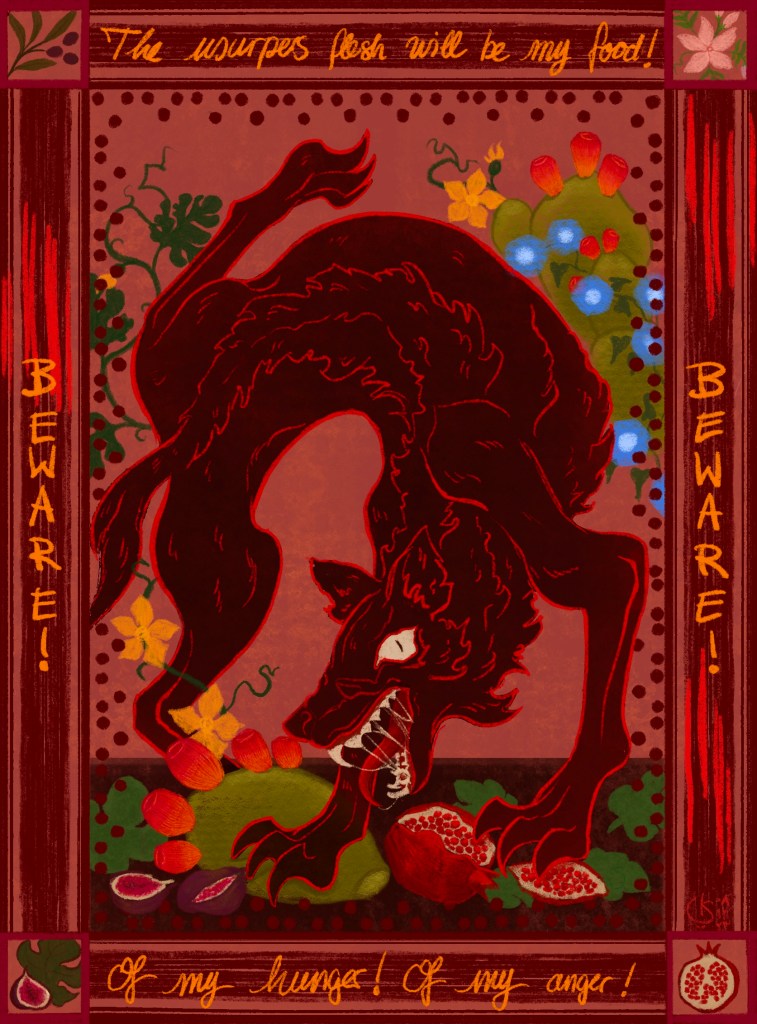
Title: Wild Hunger // Artist: Orangeblossombitch
about the piece
| Based on Mahmoud Darwish’s poem “Identity Card”, specifically this verse: Write down! I am an Arab You have stolen the orchards of my ancestors And the land which I cultivated Along with my children And you left nothing for us Except for these rocks … So will the State take them As it has been said?! Therefore! Write down on the top of the first page: I don’t hate people, I trespass on no one’s property. And yet, if I were to become hungry. I shall eat the flesh of my usurper. Beware, beware of my hunger And of my anger! in which he talks about the natural reaction to oppression. I created this piece shortly after the beginning of the genocide in Gaza, wanting to channel my rage and fury into something somewhat useful. While scouring one of Mahmoud Darwish´s poetry books I came across the poem, and like many others I came across it was decades old yet simultaneously more relevant and current than ever. Something that is accepted as natural in any living being, the refusal to politely and quietly die when face by a foe, violence as a means to protect yourself against an aggressor, to survive, is still not acceptable when it comes to Palestinians. Especially not in Germany. An Arabian Wolf is featured together with several plants and fruits that are of cultural significance in Palestine, such as watermelon, pomegranate, figs, olives and the Sabra cactus. The border is based on the weaving pattern on the Kuffiyeh, which represents ancient trading routes. |
about the artist // Orangeblossombitch
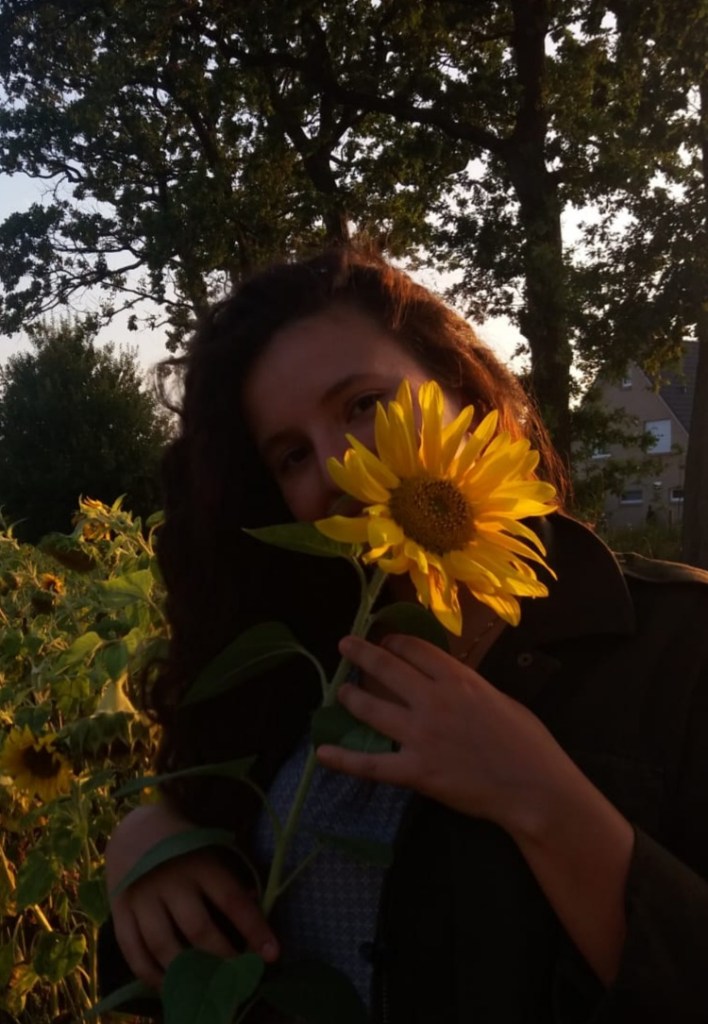
| Orangeblossombitch is a Palestinian artist and illustrator currently living in Germany. Her work spans different subjects, topics and mediums. She draws inspiration from Palestinian poetry, songs, cultural heritage and practices, Islamic art as well as nature and the women of her family. Her drawings focus mainly on feelings of nostalgia, depictions of beauty and political statements, through ornamentation and geometric art. She often incorporates other forms of Palestinian art into her pieces, such as Henna or Tatreez, finding new ways to center and reimagine common motifs and themes. |

